Hedge Trimmingin Hatfield& Hertfordshire
Get neat, well-shaped hedges that frame your home instead of taking over the garden, with every cutting cleared away before we leave.
Free quotation · Rated by customers on Google
- Georgie: NPTC / City & Guilds qualified
- £2m public liability insurance
- Licensed waste carrier
- Free quotations
- 24/7 emergency call-outs
Service overview
What hedge trimming involves
Hedge trimming keeps hedges dense, healthy and in shape. It ranges from regular trims of formal privet, box, beech and laurel hedges to cutting back tall, wide conifers and leylandii that have run out of control. Rosewood Tree Care Ltd trims and reduces hedges for homes in Hatfield and across Hertfordshire, and as a licensed waste carrier removes all the cuttings afterwards.
Who it’s for
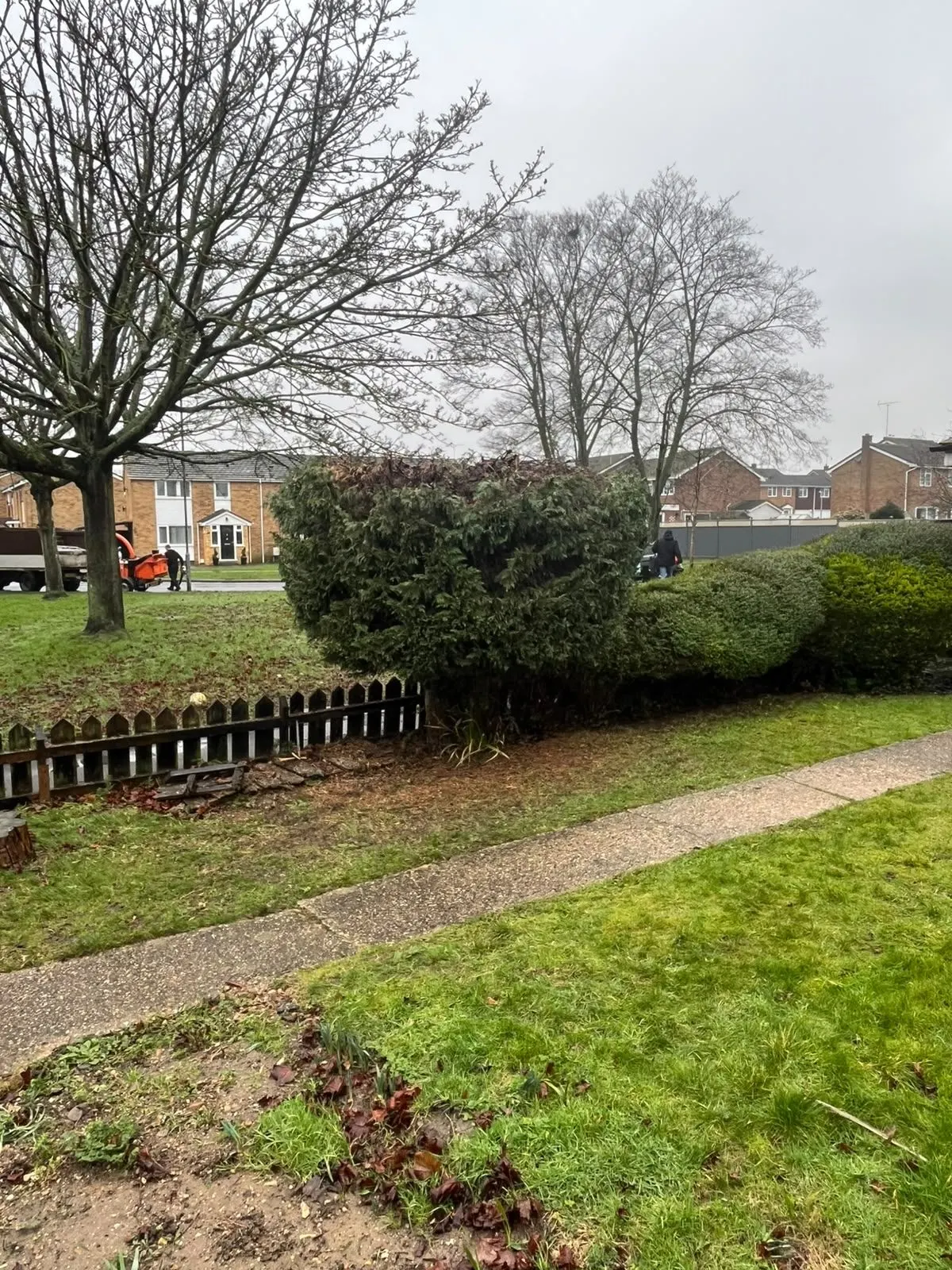
Hedge trimming is for homeowners who want tidy boundaries without the time, the ladders and the mountain of clippings. It also suits people with hedges that have grown too tall or wide, are overhanging the pavement or a neighbour’s garden, or are blocking light from windows and gardens.
When you need it
Most hedges benefit from at least one trim a year, and faster-growing ones from more. Call when your hedge is losing its shape, spreading across paths, blocking driveway sight lines, shading the garden or becoming too tall to reach safely.
If it’s left too long
What happens when the work waits
Hedges grow quickly. Missing a year or two can mean a far bigger job and a hedge that is harder to bring back into shape.
Height and width creep
Untrimmed hedges gain height and width every year, eating into gardens, paths and pavements.
Bare patches
Many conifers, including leylandii, do not regrow from old brown wood. Leave them too long and hard cutting back may leave gaps.
Neighbour and highway issues
Overgrown hedges can block light, overhang boundaries and obstruct pavements or sight lines at driveways.
Common mistakes we see
- Cutting conifers back into old brown wood that won’t regrow.
- Trimming the top wider than the base, which shades the lower hedge.
- Working on ladders with powered trimmers.
- Trimming during nesting season without checking for birds.
- Leaving clippings in the base of the hedge.
- Letting a fast-growing hedge go years between trims.
Our process
How the job runs, step by step
- 01
Get in touch
Tell us the type, length and height of your hedges and what you would like done.
- 02
Agree the finish
We discuss the height, width and shape you want, and what the hedge can tolerate.
- 03
Free quotation
You receive a quotation for the trimming and clearance before the work starts.
- 04
Trim and shape
The team cuts the hedge to the agreed shape, using suitable access for tall sections.
- 05
Clear away
All clippings are collected and removed from your property, leaving the area tidy.
The result
What you get from the work
Neat boundaries
Crisp, even hedges make the whole property look cared for.
Space reclaimed
Reducing width gives back garden, path and driveway space.
More light
Lowering tall hedges lets light reach gardens and windows.
Thicker, healthier hedges
Regular trims encourage dense growth from the base upwards.
No ladders for you
Tall and awkward sections are handled safely by the team.
No clippings left
As a licensed waste carrier we take every cutting away when the job is done.
In detail
Hedge work we carry out
Different hedges need different treatment. Here is how we approach the most common types of hedge work in Hertfordshire gardens.
Formal hedges
Privet, box, yew, beech, hornbeam and laurel hedges are trimmed to crisp lines. Shaping the hedge slightly narrower at the top than the base helps light reach the lower growth.
Conifer and leylandii hedges
Leylandii and other conifers grow quickly and should be trimmed regularly while still green. They usually won’t regrow from old brown wood, so reductions must be planned carefully.
Height and width reductions
Overgrown hedges can be reduced to bring them back to a manageable size. Large reductions on some species are best done in stages over more than one season.
Informal and mixed hedges
Native and mixed hedges, such as hawthorn and hazel, can be cut in a looser style that supports wildlife while keeping the boundary under control.
Nesting birds
Hedges are popular nesting sites, and active nests are protected by law. During spring and summer we check hedges carefully before cutting.
Hedges and neighbours
High hedges can affect neighbouring properties. Appropriate trimming may help reduce boundary concerns, but cannot guarantee an end to disputes. Discuss ownership, access and the agreed height with neighbours where relevant.
What affects the cost of hedge trimming
Every quotation is free and based on your job. These are the main factors that shape the price.
Length and height
The longer and taller the hedge, the more time it takes. Hedges above head height need platforms or other safe access, which adds to the job.
How overgrown it is
A regular annual trim is quicker than cutting back a hedge that has been left to spread for several years. Heavier cutting also produces much more waste.
Volume of green waste
Every job ends with the green waste removed from your property. More branches, foliage and timber means more chipping, loading and disposal. Conifers and evergreen hedges produce far more volume than people expect, so this is one of the bigger variables in any quotation.
Access to the work
Wide side access, a clear driveway or an open front garden makes it quicker to move equipment and waste. Narrow passages, steps, steep slopes, glasshouses or tight back gardens mean more time carrying material by hand, and that time is reflected in the quotation. Let us know about access when you first get in touch so the quote is accurate.
Both sides and the top
Trimming one face, both faces and the top all change the time needed. If the far side is in a neighbour’s garden, access to it needs to be agreed first.
Hedge Trimming across Hertfordshire
Georgie holds NPTC / City & Guilds qualifications and leads the team. Rosewood holds £2 million public liability insurance. Work on tall sections is planned with precautions intended to reduce risks to people and nearby property.
Regular trimming also keeps the hedge healthier. Cutting little and often encourages branching close to the face of the hedge, building a dense screen that blocks views and noise. Hedges that are only cut every few years tend to become hollow, with foliage only on the outside and bare stems inside, which makes later reductions more difficult. A suitable trimming routine can help manage hedge height and width, subject to species, growth and the agreed scope. All green waste from the work is removed on completion.
When you contact us, it helps to tell us roughly how long and how high your hedges are, what type they are, whether both sides need trimming and whether any section borders a road or a neighbour’s garden. Photographs make it easier to give a free quotation based on the agreed scope.
You can discuss booking hedge trimming alongside tree work, such as pruning a tree that overhangs the hedge or grinding the stump of a removed conifer. Ask whether the jobs can be scheduled together. All green waste from the agreed work is removed on completion.
Steve Collier described Georgie and the team as doing a good and efficient job for a good price, and being very pleased with the end result.
Leylandii, laurel and privet are the most common hedges in Hatfield, Welwyn Garden City and across Hertfordshire. Leylandii in particular can add significant height in a single season if left untrimmed.
Front hedges beside pavements and driveways also need to stay clear of footpaths and sight lines, which can help maintain visibility and access.
Regular trimming is the easiest way to keep a hedge looking good and avoid the larger reductions that some species struggle to recover from.
Your questions
Hedge Trimming FAQs
How much does hedge trimming cost?
It depends on the length, height and type of hedge, how overgrown it is and how much waste there is. We provide a free quotation.
How often should a hedge be trimmed?
Most hedges need at least one trim a year, and fast-growing hedges like leylandii and privet may need two or more.
When is the best time to trim a hedge?
Many hedges are trimmed in late summer, with some species suited to other times. We check for nesting birds in spring and summer.
Can you reduce a very tall hedge?
Yes. We can reduce tall and wide hedges. Some species, particularly conifers, need careful planning to avoid bare patches.
Do you take away the hedge cuttings?
Yes. All green waste is completely removed from your property once the job is complete.
Can you trim leylandii?
Yes. Leylandii should be trimmed regularly while the growth is still green, as it usually won’t regrow from old brown wood.
How long does hedge trimming take?
Timing depends on hedge size, condition, access and the agreed scope. Discuss an estimate and any need for multiple visits when requesting a quotation.
Do you trim hedges near me?
We are based in Hatfield and cover Hertfordshire, including Welwyn Garden City, St Albans, Hertford, Potters Bar, Harpenden, Stevenage and Ware.

Get your hedges back in shape
Tell us about your hedges and the finish you want. We will provide a free quotation and clear every clipping.
- Georgie: NPTC / City & Guilds qualified
- £2m public liability insurance
- Licensed waste carrier
- Free quotations
Prefer to read more first? Contact details